Lorem Ipsum is simply dummy text of the printing and typesetting industry. Lorem Ipsum has been the industry's standard dummy text ever since the 1500s, when an unknown printer took a galley of type and scrambled it to make a type specimen book. It has survived not only five centuries, but also the leap into electronic typesetting, remaining essentially unchanged. It was popularised in the 1960s with the release of Letraset sheets containing Lorem Ipsum passages, and more recently with desktop publishing software like Aldus PageMaker including versions of Lorem Ipsum.
BLOGS
Are You Compromising With Your Health?
Breakfast should be healthy, heavy and well-balanced so that your body stays energized throughout the day. But do you know what your body really needs as the first meal of the day? Are you having the right breakfast? Let me help you find out.
Which breakfast cereal do you use?
A breakfast cereal meal is quick, easy and promised to be healthy.
But do you know what goes in making your so-called “healthy” breakfast cereals?
After closely going through their ingredients and nutritional information of all the breakfast cereals available in the market which includes convenient food like instant food packets flavoured cereals, I got to know the reality behind theses breakfast cereals.
These are unhealthiest of all flavour cereals, sweet or salty are generally marketed as healthy breakfast options although the high amount of sugar sodium artificial, flavours, colours and preservatives.
Sugar, Invert sugar syrup, Liquid glucose, Colours, Preservatives, Maida, Malt Extract, etc, are the major macro-nutrients in them.
And unfortunately, these are present in the commonly used breakfast cereals available in the market.
These are artificially processed sugar-candies which are very high in sugar, have preservatives, artificial flavours, synthetic anti-oxidants, etc, and these are extremely unhealthy.
Your body doesn’t really absorb these vitamins and minerals in the same way as from natural or organic options.
These are low in protein and do not qualify as a good breakfast option. Consuming any of these breakfast cereals would just fill your stomach with empty calories and mainly to fat storage and other health problems in the future.
It is not something which your body needs for breakfast.
It’s better to stay away from these so-called “healthy” breakfast cereals.
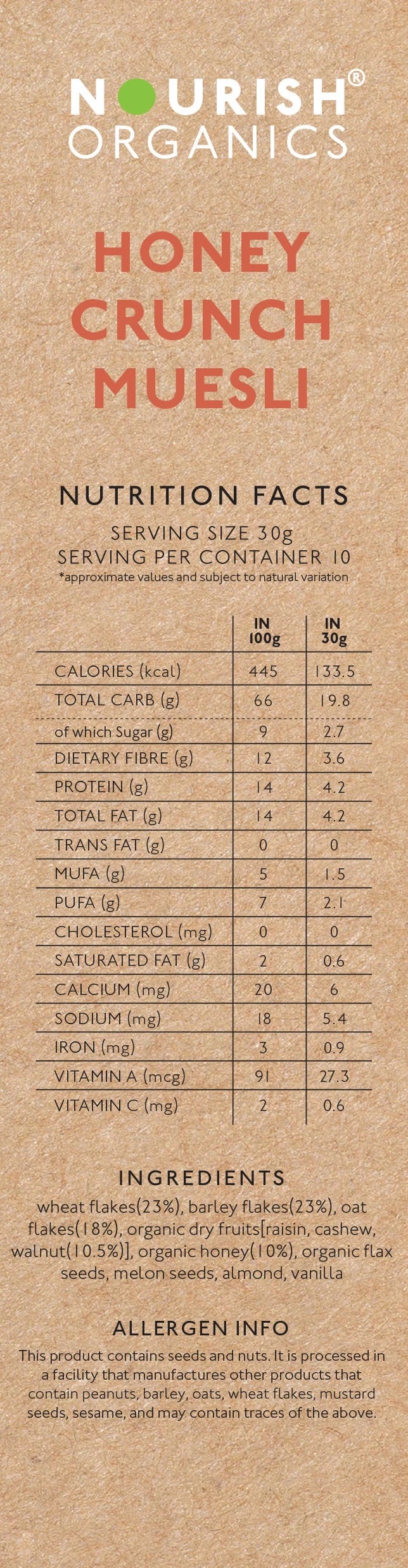
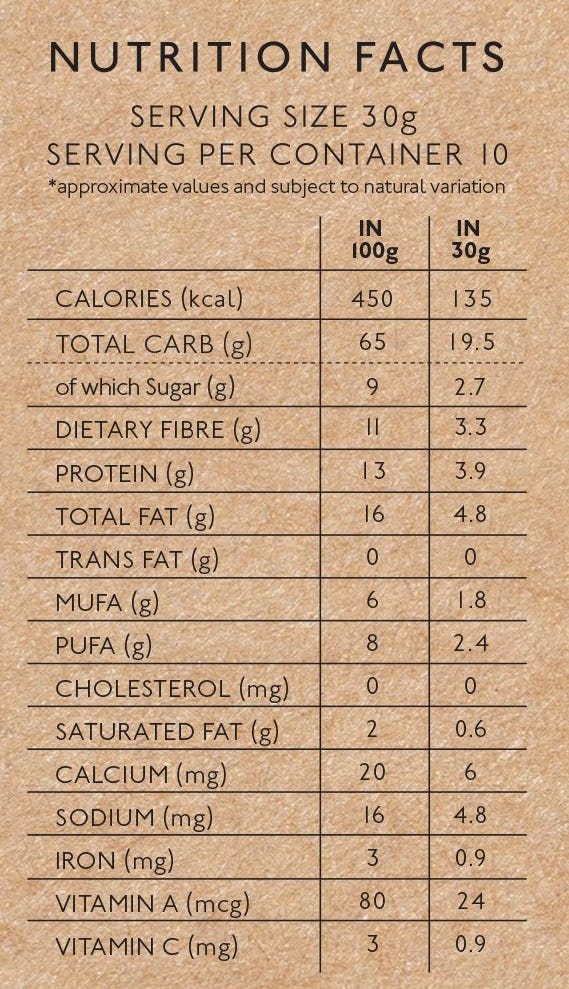
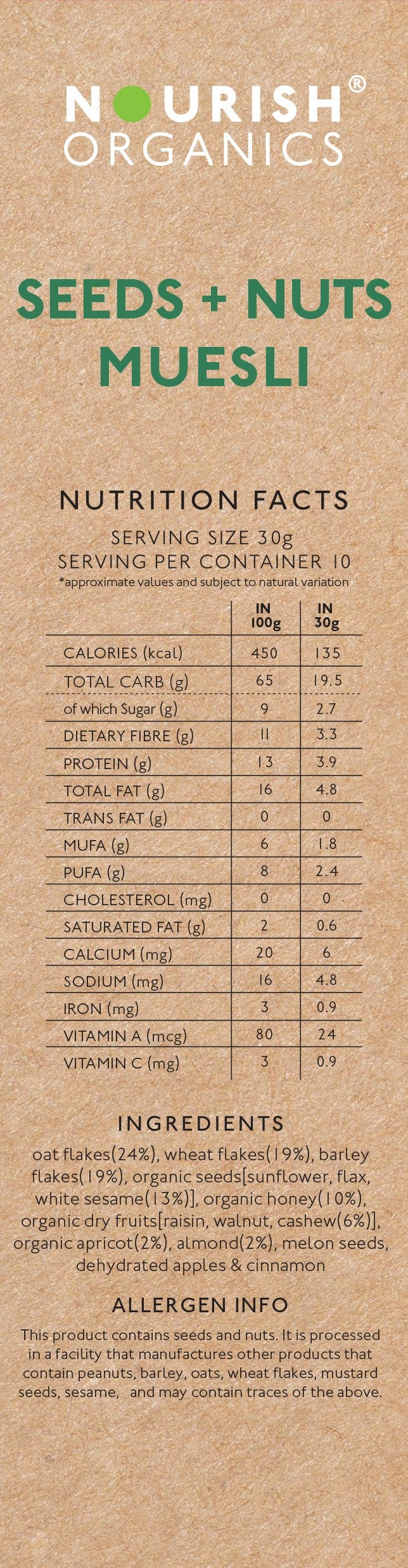
While buying breakfast cereals you should check its nutritional information and it should be super low in sugar about 2g per 30g of cereal, high in fibre not less than 7g per 100g and protein should not be less than 7g per 100g.
It is more important to check the ingredients thoroughly to know from where these macro-nutrients are coming from.
Then there is paratha, dosa, poha and sandwich which has simple carbs, saturated fat and oil in it which will make you put on extra weight. These are also not a great option for breakfast as it won’t keep you full for a longer period of time. There are just excess carb and low protein which is not something your body screams for the first meal of the day.
Overall if you wish to live a healthy life then all these options should only be consumed occasionally.
A research suggests that consuming “ultra-processed” foods could increase the risk of cardiovascular disease and death.
Two studies, published in the journal the BMJ, highlight the potential link between a high intake of packaged snacks and ready meals, and harm to health.
The first study, carried out by scientists from France and Brazil, included more than 105,000 French adults.
The study found a 10% increase in the proportion of “ultra-processed” food in the diet was linked with a 12% increased risk of cardiovascular disease, 13% increase for coronary heart disease and 11% for cerebrovascular diseases, affecting the blood supply to the heart and brain.
An association was also seen between intake of unprocessed or minimally-processed foods and lower risk of reported diseases.
In a separate study, researchers from the University of Navarra in Spain analysed data from around 20,000 adults over 10 years.
They found that eating more than four servings of “ultra-processed” food per day was linked with a 62% increased risk of death from any cause, compared with those who ate less than two servings.
Each additional serving increased mortality risk by 18%.
The University of Navarra researchers said “Improving diet based on adherence to minimally processed food — a key aspect of the Mediterranean diet — has been shown to protect against chronic disease and all-cause mortality”
“Discouraging the consumption of ultra-processed foods; targeting products, taxation, and marketing restrictions on ultra-processed products; and promotion of fresh or minimally processed foods should be considered part of important health policy to improve global public health.”
But what if you want to take your health to the next level what if you wish to cut the extra fat from your body and build lean muscle mass.
It is difficult to find out the best breakfast cereal which is healthy and convenient to make.
So, which is the best cereal in the market?
What options do we have? Are there any breakfast cereals in the market which can be consumed daily and guilt-free?
Thankfully yes.
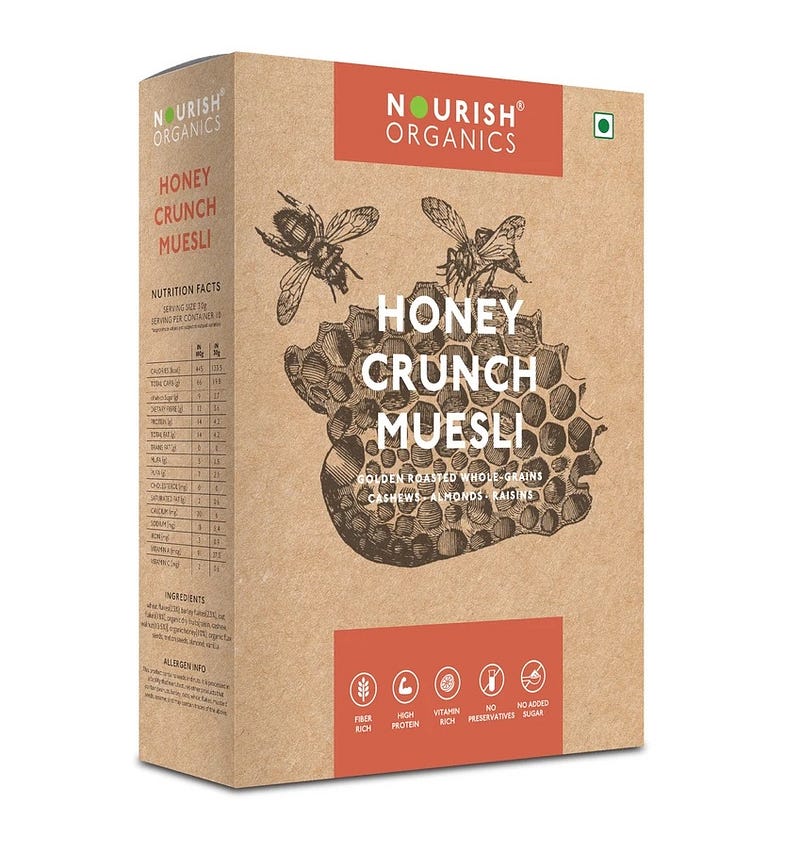
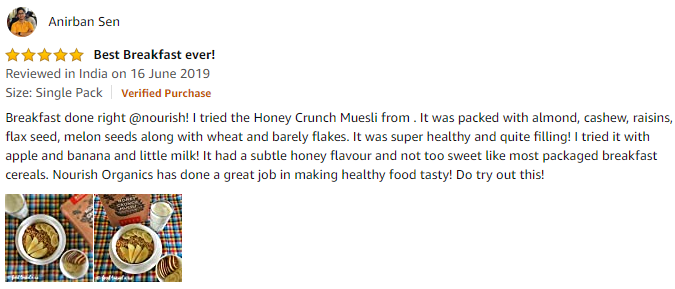
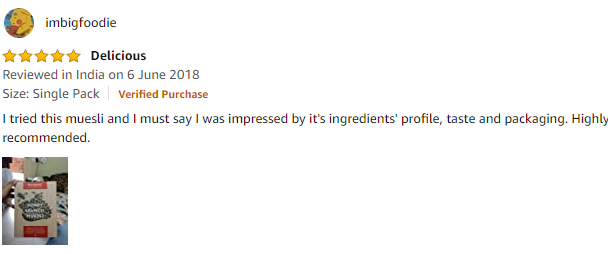
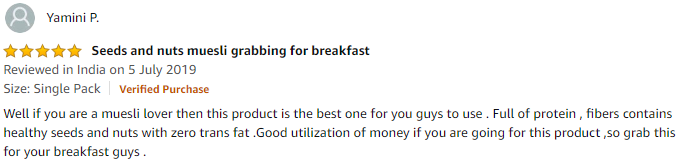
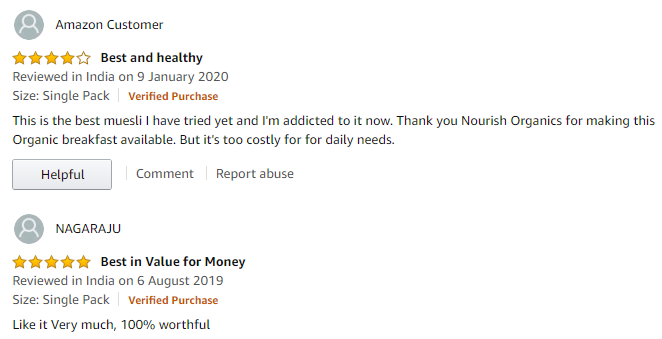
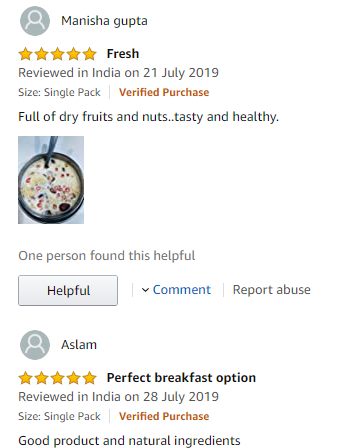
There are breakfast cereals by Nourish Organics which comes in 8 different varieties. But it is their Honey Crunch Muesli and Seeds and Nuts Muesli I like the most.
Nourish Organics Honey Crunch Muesli
Product Description
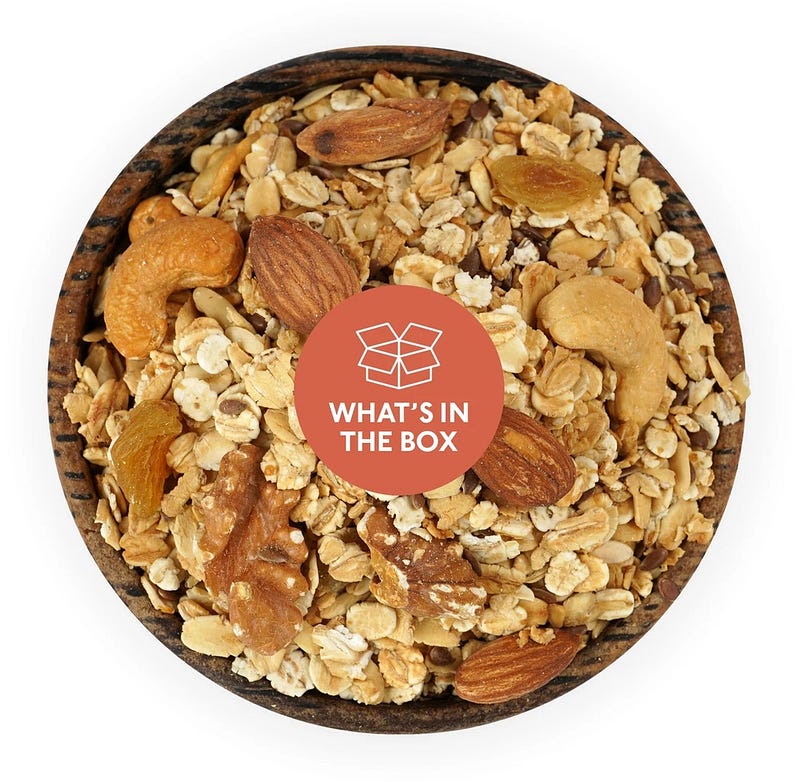
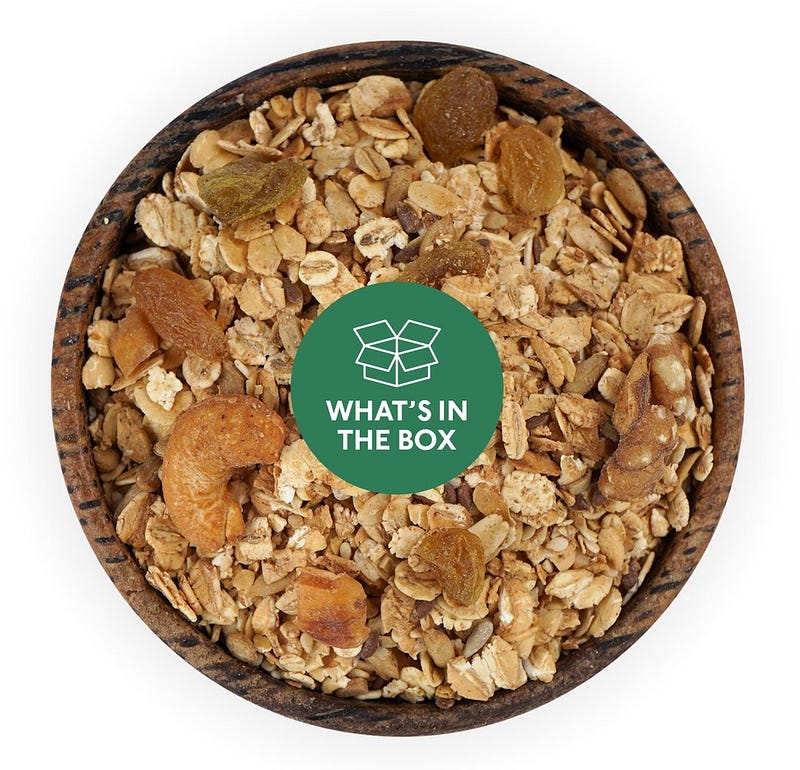
With a mix of whole grains, seeds, nuts, and raisins, our Honey Crunch Muesli is crunchy and satisfying granola that everyone will enjoy! A bowl of this muesli is packed with amazing goodness, full of heart-healthy fibre, strengthening plant protein, nourishing omega-3’s — all sweetened with a golden touch of honey. Mix with your favourite yoghurt, chopped apple, and dates for an energising start to your day!
Celebrate your morning with a delicious bowlful of our superfood-packed Seeds and Nuts Muesli! Raisins, apricots and apples deliver sweet bursts of flavour alongside toasty nuts, seeds and whole grains. With a hearty dose of fibre, omega-3’s, and healthy plant protein in every serving, this muesli makes a perfect accompaniment to yoghurt, porridge, or atop a warm berry crumble!
Nourish Organics is a brand focused on holistic living. Bringing healthy ready to consume snack and food products to the buzzing urban lifestyle is part of the mission. The produce used is brought from organic sources and free from harmful chemicals. These products are a healthy alternative to processed foods. Nourish Organics play a role in employing farmers and giving back to society as well.
(THIS SALES PAGE IS CREATED FOR MY INTERNSHIP PROGRAM BY DIGITAL DEEPAK.)
Let me start by explaining to you the purpose of this blog, it's my second assignment of the Internship Program by Deepak. Here I will be discussing my learnings from class 2 and also, I will be talking about who’s my ideal Customer Avatar and how did I find out. Let’s get into the learnings first.
The pressure to complete our tasks
In class 2, Deepak said that they received very high assignment completion rate of 89%, that’s a lot, its amazing response. Reason being, there is positive pressure to complete our assignments. Usually, when we’re in school or college, we have negative pressure to complete our homework. For example, if we do not complete our homework, we have a fear to get punished or we might be asked to bring our parents to a parent-teacher meeting. But in this program, we have positive pressure to complete our assignments. We can refer to the phrase ‘Carrot and Stick’. In this program, instead of sticks, we have carrots, which is, if we complete our assignments we are being rewarded. That positive pressure is going ahead and making us do the work. And as we are doing the work, transformation is happening.
The Golden Triangle
Let’s not forget what we have learned in the first class, The Golden Triangle which is Learn-Do-Teach. When we do something, the learning gets concrete inside our brain, but also if we only learn and do, we are not converting it into better understanding. When we learn something, do it, and also teach the same thing, we convert our learning into a better form of understanding. And then we are going to remember our leanings forever.
Mistakes are Future-benefits
There is no such thing as a perfect thing. If we try to do something new, we shouldn’t be afraid of making mistakes, we shouldn’t be afraid of getting things done. People run after getting things done perfectly and as a result, they end up doing nothing. Getting things done is better than getting things done perfectly. Perfection will come with practice, perfection will come with experience, perfection will come with validation. As long as we are doing something and creating value for other people, we shouldn’t run after perfection. Rather, we should do more and eventually perfection will come. Like every artist from any field, be it singing, painting or dancing, where initial work is not perfect, but when we keep doing it and start getting validation and reviews, we become better in our work. And finally, a day comes where our work is almost perfect.
Let’s take an example of Google, if we look at Google’s first website, now it looks very ugly. But they got started at that time. Imagine when it got started, they were after perfection that it should be the world’s best looking and best functional website, then they wouldn’t have been here today, a billion-dollar company. They didn’t chase perfection, they got started and perfection followed them. If they can do it anyone can.
Marketing is About Good Conversations
People have wrong conceptions about marketing. They think it is serious and it is related to door-to-door selling of encyclopaedias. But what I have learned so far is that marketing is all about conversations. If we cannot converse well with people then we cannot be a good marketer. Let’s take the example of the program itself when Deepak was telling us about the program, he conversed with us so well that we felt related to it and we went ahead and joined this program. So, the idea is that if we want to become better at marketing, we should become better at having good conversations. If we cannot converse well 1:1, we cannot converse well 1:Many.
Be Authentic to Communicate Better
One of the best and easiest way to communicate better is to be authentic to everyone. Authentic people are usually good at marketing because people are tired of fake people with social personas. Everyone is attracted to someone real and authentic. One easy way to be a good marketer is to be authentic. If we are imperfect, we shouldn’t be hiding our imperfections to the world. If we believe in something, we should tell what we believe in. If we’re not happy with something we should just tell it honestly. We shouldn’t be afraid of what other people are going to think. Every person is unique in some way and we just need to show our uniqueness to the world. There will be some percentage of people who will not like us but that’s okay. They are miserable in their lives. We shouldn’t be changing ourselves and make them like us. Rather we should be authentic and people will like us for our authenticity.
Finding the Ideal Customer
What if I said that we can improve our marketing and communication skills just by talking to one person? Yes, it’s possible and it’s the best and easiest way to connect with our audience. But at the same time if we do not know who that one person is then it is going to be difficult to create the right communication. There is always a wide spectrum of an audience from different categories like different age group, different gender, etc. It is important to assume that we cannot talk to all people all the time. So, it is very important to find out who that one person is which represents the biggest percentage of the audience. Now we will try to find out my ideal customer avatar through a survey conducted. You can have a look at my survey below.
After conducting the survey, I have got few responses. By studying and analysing the responses, I have developed my imaginary ideal customer avatar.
His name is Elon Mask of age 29. He is a postgraduate from Bangalore living in a rented apartment. He has no child and he is employed full-time in the consulting industry. He has an annual income of ₹5,00,000 to ₹9,99,999 and he owns a bike/scooter. He eats healthy and he purchases or uses organic products. He makes all the daily purchase decisions and he is concerned about the effects that non-organic products have on the environment. He is also bothered with the idea of eating genetically modified foods or pesticide foods and strongly agrees with the statement “It is essential that I consume organic products”. He usually shops household item from a local market.
I would like to end this blog by saying that 'Awkwardness is an Indicator of Learning'. Please pardon any mistake in this blog and suggestion in comments would be appreciated. Thank you for reading. Have a good day :)
First of all, let's get straight to the title of this post. I am from a small town with basic education, lucky enough to be part of Jio-revolution. It was 2016 when Jio was launched newly in town I got an opportunity to get my hands on jio-sim with a basic 4G enabled smartphone. Like everyone else I was also completely into Youtube and discovered many new things, two years passed and like every else from a small town I started searching How To Earn Online. After wasting some more months, I discovered what Blogging is and started researching more about it. Later, I enrolled in Deepak sir's 100-day Blogging Course. But could not start my blog because I had very little knowledge about it. One and a half year passed and here I am in the Digital Deepak's Internship Program Batch 2. This blog post is part of my assignment. And this is my first blog and I know I am pretty bad at this. I hope to learn and improve with time.
This blog is about my key learnings from Class 1(Finding The Gold) of the Internship Program.
THE GOLDEN TRIANGLE
If we learn something new the information is organised in our brain but no so well organised manner that we can remember it. When we apply our learning and take actions to do it then the information in our brain gets reinforced with the results that we are getting by doing it. So it's not just information now. It becomes understanding when we take actions and get the results. Similarly, when we apply what we have learned by doing it into teaching we are forcing our mind to put the things simply so that the others can understand. As Albert Einstein said, "If you can't explain it simply, you don't understand it well enough."
MY GOALS FOR THIS PROGRAM
Warren Buffet said, "An idiot with a plan and a goal can beat a genius without a plan and a goal."
i. Improve my communication skill: If we have a product or a service to sell, we need to communicate and explain to people what is the benefit of buying the product or service.
Some easy ways to master communication:
a) By reading a lot.
b) Listening to podcasts.
c) By writing a lot.
d) By watching series and documentaries.
ii. Becoming a consultant: In this digital world, everyone wants to be digital. So I want to help people with their digital presence.
A LITTLE BIT ABOUT GLOBAL ECONOMICS
One of the simplest reasons that affect the economy of a country is when the average age of the country goes up. When we are 20-25 years old we are living in our parents' house and our household spendings are very less as compared to the individuals who are 25-30 years old because individuals who are 25-30 years old would probably move out of their parent's house and start living alone and hence they will end up spending more. Then we also get married and spendings will keep rising. Here the point is that our spendings will go up from the age of 25-50. But when are above 50 household spendings will go down. The more we spend the more economy rises. Yes, government policies affect the economy but people spending for whatever they want is unstoppable. The average age of India is 28.4 years, so this is where the opportunity lies. Debt also plays a role in creating money in the economy.
MARKETING FUNDAMENTALS
Marketing has been there for a long time since the invention of trading and what digital marketing has done for marketing is that it has brought in a lot of technology which makes marketing more efficient and scalable. Being a digital marketer the emphasis shouldn't be on the digital, the emphasis should be on the marketer. We need to be a good marketer first to be a good digital marketer. Marketing is all about understanding human psychology, understanding how to sell and understanding how to communicate. The future of digital marketing is that it will not die because marketing will not die. Mediums and technology will keep changing but marketing will always be there.
HOW INTEGRATED DIGITAL MARKETING WORKS
When we look at the different components of digital marketing, we have content marketing at the centre where we first publish our content. Then we will have search engine traffic because we are publishing content and search engines will discover it and search engines will send traffic to our content. Then, we have the content and we are sharing on social media, we are going to get traffic from social media. When we have traffic on our content we can start building an email list. And once we have an email list and publish a piece of content we can drive traffic to our content from the email list. Paid advertising helps to build an email list and also drives traffic to our content and lastly, once we have good email marketing and content marketing then we can focus on sells and conversion.
HOW TO SELECT NICHE
We need to be a market leader. People always remember the first. If we are passionate about something we are going to enjoy doing it. When we enjoy doing it we start doing it a lot. We are going to be better at it and enjoy doing it even more. Hence it should be a combination of passion, talent and market opportunity.
CONCLUSION
It has been a great journey till now though it has just started. All the interns are very helpful and Krishna too. It feels amazing to write this blog knowing that people will be reading. Thank you Deepak sir for creating this amazing program and making a 'Real' change.
Lorem ipsum dolor sit amet, consectetur adipiscing elit, sed do eiusmod tempor incididunt ut labore et dolore magna aliqua. Vel orci porta non pulvinar neque. Nisl nisi scelerisque eu ultrices vitae auctor eu augue ut. Non quam lacus suspendisse faucibus interdum posuere lorem ipsum. Tincidunt lobortis feugiat vivamus at augue eget arcu. Purus in mollis nunc sed id semper risus. Adipiscing elit pellentesque habitant morbi tristique senectus et netus et. Sed viverra tellus in hac habitasse platea dictumst. Cras sed felis eget velit aliquet. Nullam non nisi est sit amet facilisis magna etiam tempor. Tortor consequat id porta nibh venenatis cras sed. Vitae et leo duis ut diam quam nulla. Vitae elementum curabitur vitae nunc sed velit dignissim. Laoreet sit amet cursus sit amet dictum sit. Iaculis eu non diam phasellus vestibulum lorem. Amet dictum sit amet justo donec enim diam vulputate.
Interdum varius sit amet mattis vulputate enim. Non pulvinar neque laoreet suspendisse interdum. Elit ut aliquam purus sit amet luctus venenatis lectus. Nunc congue nisi vitae suscipit tellus mauris. Id venenatis a condimentum vitae sapien pellentesque habitant morbi tristique. Erat velit scelerisque in dictum non consectetur a erat. Condimentum mattis pellentesque id nibh tortor id aliquet lectus proin. Nisl purus in mollis nunc sed id semper risus in. Adipiscing enim eu turpis egestas pretium aenean pharetra magna. Nulla malesuada pellentesque elit eget gravida cum sociis. Risus viverra adipiscing at in tellus. Lacus luctus accumsan tortor posuere ac.
Eget aliquet nibh praesent tristique magna. Enim blandit volutpat maecenas volutpat blandit aliquam etiam erat. Adipiscing vitae proin sagittis nisl rhoncus mattis. In metus vulputate eu scelerisque felis imperdiet proin fermentum. Et netus et malesuada fames ac turpis. Tortor consequat id porta nibh. Amet dictum sit amet justo donec enim. Nam aliquam sem et tortor consequat id porta. Faucibus purus in massa tempor nec feugiat nisl pretium fusce. Tincidunt lobortis feugiat vivamus at augue eget arcu dictum. Donec ac odio tempor orci dapibus ultrices. Aliquet nec ullamcorper sit amet risus nullam eget. Ut consequat semper viverra nam libero. Sollicitudin aliquam ultrices sagittis orci a. Mi in nulla posuere sollicitudin aliquam ultrices sagittis orci. Est sit amet facilisis magna etiam tempor orci eu. Ultricies leo integer malesuada nunc vel risus commodo viverra. Nunc mattis enim ut tellus elementum sagittis vitae et leo. Varius sit amet mattis vulputate enim nulla aliquet. Habitant morbi tristique senectus et.
Iaculis at erat pellentesque adipiscing commodo elit at imperdiet dui. Volutpat est velit egestas dui id ornare arcu. Arcu ac tortor dignissim convallis aenean et. Risus in hendrerit gravida rutrum quisque non tellus orci ac. Aenean vel elit scelerisque mauris. Maecenas ultricies mi eget mauris pharetra et ultrices neque. Vehicula ipsum a arcu cursus vitae congue mauris. Commodo ullamcorper a lacus vestibulum sed arcu non odio. Arcu risus quis varius quam quisque id diam vel quam. Aliquam ut porttitor leo a diam sollicitudin tempor.
Amet mauris commodo quis imperdiet massa tincidunt nunc pulvinar sapien. Id nibh tortor id aliquet lectus proin nibh. Dui sapien eget mi proin sed libero enim sed. Id interdum velit laoreet id donec ultrices tincidunt. Ultrices dui sapien eget mi. Tellus integer feugiat scelerisque varius. Faucibus turpis in eu mi bibendum neque egestas. Et netus et malesuada fames ac turpis egestas sed. Vitae suscipit tellus mauris a diam maecenas sed. Sed vulputate mi sit amet. Vitae tempus quam pellentesque nec nam. Phasellus faucibus scelerisque eleifend donec pretium. Vulputate eu scelerisque felis imperdiet proin fermentum leo vel orci. Neque volutpat ac tincidunt vitae. Non curabitur gravida arcu ac. Vulputate mi sit amet mauris commodo quis. Magna fringilla urna porttitor rhoncus dolor. Donec massa sapien faucibus et molestie ac feugiat sed lectus.
The articles in English grammar are the and a/an, and in certain contexts some. "An" and "a" are modern forms of the Old English "an", which in Anglian dialects was the number "one" (compare "on" in Saxon dialects) and survived into Modern Scots as the number "owan". Both "on" (respelled "one" by the Norman language) and "an" survived into Modern English, with "one" used as the number and "an" ("a", before nouns that begin with a consonant sound) as an indefinite article.
In English grammar, articles are frequently considered part of a broader category called determiners, which contains articles, demonstratives (such as "this" and "that"), possessive determiners (such as "my" and "his"), and quantifiers (such as "all" and "few").[1] Articles and other determiners are also sometimes counted as a type of adjective, since they describe the words that they precede.[2]
In languages that employ articles, every common noun, with some exceptions, is expressed with a certain definiteness, definite or indefinite, as an attribute (similar to the way many languages express every noun with a certain grammatical number—singular or plural—or a grammatical gender). Articles are among the most common words in many languages; in English, for example, the most frequent word is the.[3]
Articles are usually categorized as either definite or indefinite.[4] A few languages with well-developed systems of articles may distinguish additional subtypes. Within each type, languages may have various forms of each article, due to conforming to grammatical attributes such as gender, number, or case. Articles may also be modified as influenced by adjacent sounds or words as in elision (e.g., French "le" becoming "l'" before a vowel), epenthesis (e.g., English "a" becoming "an" before a vowel), or contraction (e.g. Irish "i + na" becoming "sna").
The definite article, the, is used to refer to a particular member of a group or class. It may be something that the speaker has already mentioned or it may be something uniquely specified. The is the only definite article in English, for both singular and plural nouns.
The children know the fastest way home.
The sentence above refers to specific children and a specific way home; it contrasts with the much more general observation that:
Children know the fastest ways home.
The latter sentence refers to children in general and their specific ways home. Likewise,
Give me the book.
refers to a specific book whose identity is known or obvious to the listener; it has a markedly different meaning from
Give me a book.
which uses an indefinite article, which does not specify what book is to be given.
The definite article can also be used in English to indicate a specific class among other classes:
The cabbage white butterfly lays its eggs on members of the Brassica genus.
However, recent developments show that definite articles are morphological elements linked to certain noun types due to lexicalization. Under this point of view, definiteness does not play a role in the selection of a definite article more than the lexical entry attached to the article.[clarification needed][5][6]
An indefinite article indicates that its noun is not a particular one identifiable to the listener. It may be something that the speaker is mentioning for the first time, or the speaker may be making a general statement about any such thing. a/an are the indefinite articles used in English. The form an is used before words that begin with a vowel sound (even if spelled with an initial consonant, as in an hour), and a before words that begin with a consonant sound (even if spelled with a vowel, as in a European).
She had a house so large that an elephant would get lost without a map.
Before some words beginning with a pronounced (not silent) h in an unstressed first syllable, such as historic(al), hallucination, hilarious, horrendous, and horrific, some (especially older) British writers prefer to use an over a (an historical event, etc.).[7]An is also preferred before hotel by some writers of British English (probably reflecting the relatively recent adoption of the word from French, in which the h is not pronounced).[8] The use of "an" before words beginning with an unstressed "h" is more common generally in British English than in American.[8] American writers normally use a in all these cases, although there are occasional uses of an historic(al) in American English.[9] According to the New Oxford Dictionary of English, such use is increasingly rare in British English too.[7] Unlike British English, American English typically uses an before herb, since the h in this word is silent for most Americans. The correct usage in respect of the term "hereditary peer" was the subject of an amendment debated in the UK Parliament.[10]
The word some can be viewed as functionally a plural of a/an in that, for example, "an apple" never means more than one apple but "give me some apples" indicates more than one is desired but without specifying a quantity. In this view it is functionally homologous to the Spanish plural indefinite article unos/unas; un/una ("one") is completely indistinguishable from the unit number, except where it has a plural form (unos/unas). Thus Dame una manzana" ("Give me an apple") but "Dame unas manzanas" ("Give me some apples"). The indefiniteness of some or unos can sometimes be semiquantitatively narrowed, as in "There are some apples there, but not many."
Some also serves as a singular indefinite article, as in "There is some person on the porch".
The articles in English grammar are the and a/an, and in certain contexts some. "An" and "a" are modern forms of the Old English "an", which in Anglian dialects was the number "one" (compare "on" in Saxon dialects) and survived into Modern Scots as the number "owan". Both "on" (respelled "one" by the Norman language) and "an" survived into Modern English, with "one" used as the number and "an" ("a", before nouns that begin with a consonant sound) as an indefinite article.
In English grammar, articles are frequently considered part of a broader category called determiners, which contains articles, demonstratives (such as "this" and "that"), possessive determiners (such as "my" and "his"), and quantifiers (such as "all" and "few").[1] Articles and other determiners are also sometimes counted as a type of adjective, since they describe the words that they precede.[2]
In languages that employ articles, every common noun, with some exceptions, is expressed with a certain definiteness, definite or indefinite, as an attribute (similar to the way many languages express every noun with a certain grammatical number—singular or plural—or a grammatical gender). Articles are among the most common words in many languages; in English, for example, the most frequent word is the.[3]
Articles are usually categorized as either definite or indefinite.[4] A few languages with well-developed systems of articles may distinguish additional subtypes. Within each type, languages may have various forms of each article, due to conforming to grammatical attributes such as gender, number, or case. Articles may also be modified as influenced by adjacent sounds or words as in elision (e.g., French "le" becoming "l'" before a vowel), epenthesis (e.g., English "a" becoming "an" before a vowel), or contraction (e.g. Irish "i + na" becoming "sna").
The definite article, the, is used to refer to a particular member of a group or class. It may be something that the speaker has already mentioned or it may be something uniquely specified. The is the only definite article in English, for both singular and plural nouns.
The children know the fastest way home.
The sentence above refers to specific children and a specific way home; it contrasts with the much more general observation that:
Children know the fastest ways home.
The latter sentence refers to children in general and their specific ways home. Likewise,
Give me the book.
refers to a specific book whose identity is known or obvious to the listener; it has a markedly different meaning from
Give me a book.
which uses an indefinite article, which does not specify what book is to be given.
The definite article can also be used in English to indicate a specific class among other classes:
The cabbage white butterfly lays its eggs on members of the Brassica genus.
However, recent developments show that definite articles are morphological elements linked to certain noun types due to lexicalization. Under this point of view, definiteness does not play a role in the selection of a definite article more than the lexical entry attached to the article.[clarification needed][5][6]
An indefinite article indicates that its noun is not a particular one identifiable to the listener. It may be something that the speaker is mentioning for the first time, or the speaker may be making a general statement about any such thing. a/an are the indefinite articles used in English. The form an is used before words that begin with a vowel sound (even if spelled with an initial consonant, as in an hour), and a before words that begin with a consonant sound (even if spelled with a vowel, as in a European).
She had a house so large that an elephant would get lost without a map.
Before some words beginning with a pronounced (not silent) h in an unstressed first syllable, such as historic(al), hallucination, hilarious, horrendous, and horrific, some (especially older) British writers prefer to use an over a (an historical event, etc.).[7]An is also preferred before hotel by some writers of British English (probably reflecting the relatively recent adoption of the word from French, in which the h is not pronounced).[8] The use of "an" before words beginning with an unstressed "h" is more common generally in British English than in American.[8] American writers normally use a in all these cases, although there are occasional uses of an historic(al) in American English.[9] According to the New Oxford Dictionary of English, such use is increasingly rare in British English too.[7] Unlike British English, American English typically uses an before herb, since the h in this word is silent for most Americans. The correct usage in respect of the term "hereditary peer" was the subject of an amendment debated in the UK Parliament.[10]
The word some can be viewed as functionally a plural of a/an in that, for example, "an apple" never means more than one apple but "give me some apples" indicates more than one is desired but without specifying a quantity. In this view it is functionally homologous to the Spanish plural indefinite article unos/unas; un/una ("one") is completely indistinguishable from the unit number, except where it has a plural form (unos/unas). Thus Dame una manzana" ("Give me an apple") but "Dame unas manzanas" ("Give me some apples"). The indefiniteness of some or unos can sometimes be semiquantitatively narrowed, as in "There are some apples there, but not many."
Some also serves as a singular indefinite article, as in "There is some person on the porch".









 Lorem ipsum dolor sit amet, consectetur adipiscing elit, sed do eiusmod tempor incididunt ut labore et dolore magna aliqua. Vel orci porta non pulvinar neque. Nisl nisi scelerisque eu ultrices vitae auctor eu augue ut. Non quam lacus suspendisse faucibus interdum posuere lorem ipsum. Tincidunt lobortis feugiat vivamus at augue eget arcu. Purus in mollis nunc sed id semper risus. Adipiscing elit pellentesque habitant morbi tristique senectus et netus et. Sed viverra tellus in hac habitasse platea dictumst. Cras sed felis eget velit aliquet. Nullam non nisi est sit amet facilisis magna etiam tempor. Tortor consequat id porta nibh venenatis cras sed. Vitae et leo duis ut diam quam nulla. Vitae elementum curabitur vitae nunc sed velit dignissim. Laoreet sit amet cursus sit amet dictum sit. Iaculis eu non diam phasellus vestibulum lorem. Amet dictum sit amet justo donec enim diam vulputate.
